

Features
Connecticut Tudor Revival Home Receives Modern Makeover
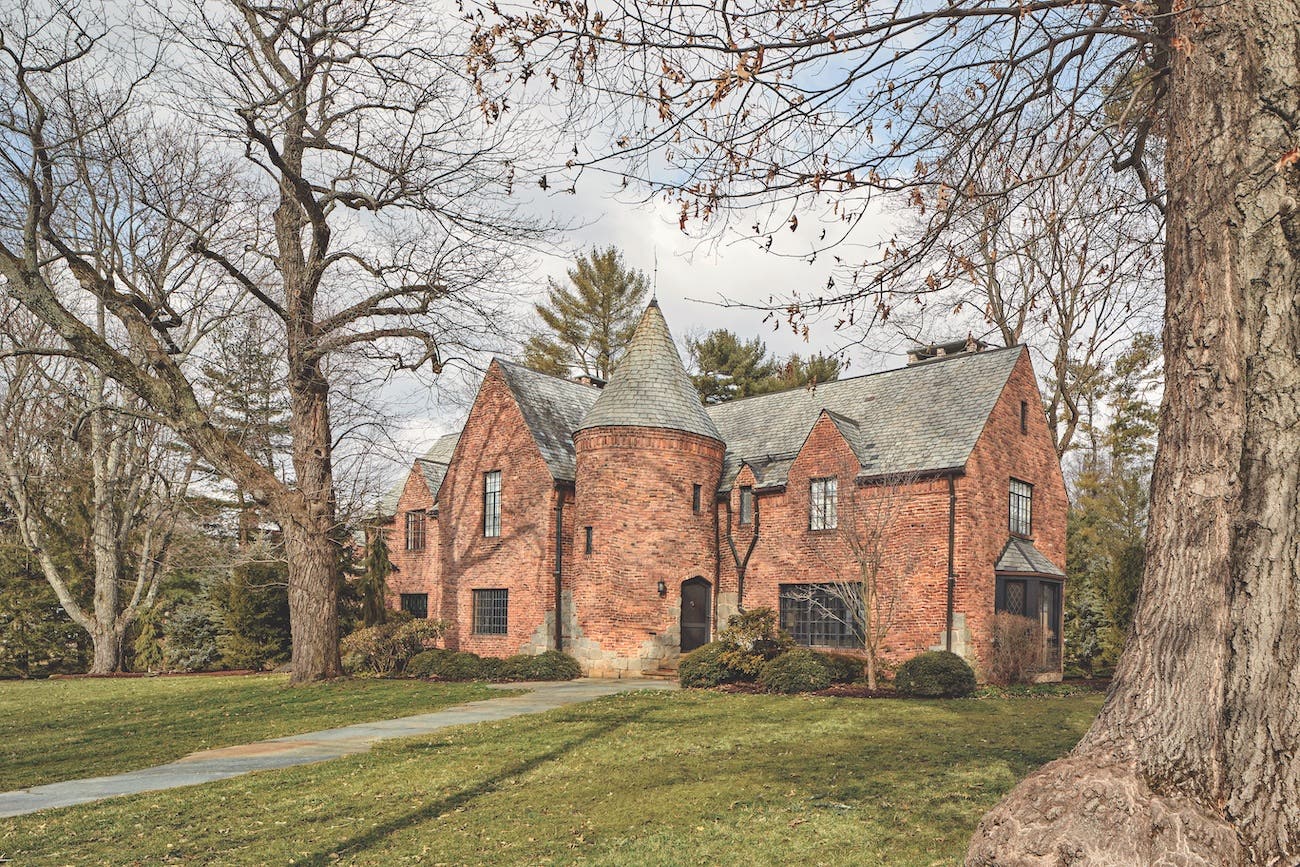
As soon as architects Charles Haver and Stewart Skolnick opened a potential client’s email and saw the house in question, they didn’t hesitate to take up the gauntlet. Just the sort of challenge they relish, their assignment involved replacing a 1970s flat-roofed addition in a 1931 Tudor Revival with a new wing that pays tribute to the original architectural design without detracting from its original spirit and character.
While the project lay well within their scope of expertise, this commission would test Haver & Skolnick Architects’ ingenuity in some unexpected ways. Upon completion, their restoration, renovation, and expansion of the Litchfield County home won the 2023 AIA Connecticut Alice Washburn Excellence Award in the "Additions/Renovations" category.
The home’s original architect, Walter P. Crabtree Jr., better known for his civic buildings than residential ones, incorporated the pitched roof, mullioned windows, tower, and high chimneys that earmarked the Tudor Revival style of his time. But where he was most meticulous was in his selection and treatment of exterior materials.
He specified wavy, irregular brickwork and roof slates that were intentionally cracked and slipped, which give the appearance of having been worn down over time. “The level of detail is wonderful and fascinating,” Haver says. “The bricks aren’t flush, necessarily, and there are different cornice details where [Crabtree] is very playful with the brick and how it’s laid, as at the top of the turret. He took it beyond just the lines of a Tudor house.”
Duplicating this original wavy brick pattern presented a dilemma. With their builder, Chris Spiller of CDS Contracting, the architects went through three masons before finding a father-and-son team who were up to the task.
“The [original] brickwork looks like a child could do it,” says Spiller. “As haphazard as it looks, however, somebody took a lot of time and effort to plan all of the details.” Stepping out of their neat-row comfort zone, the masons re-created the pattern to a T.
The same high level of diligence is evident in the home’s new Tudor Revival interiors, which reflect Crabtree’s gracious rooms featuring oak ceiling beams, slate floors, and thick plaster arches. “We wanted a dialog between something more traditional and something a little bit more contemporary,” says Skolnick.
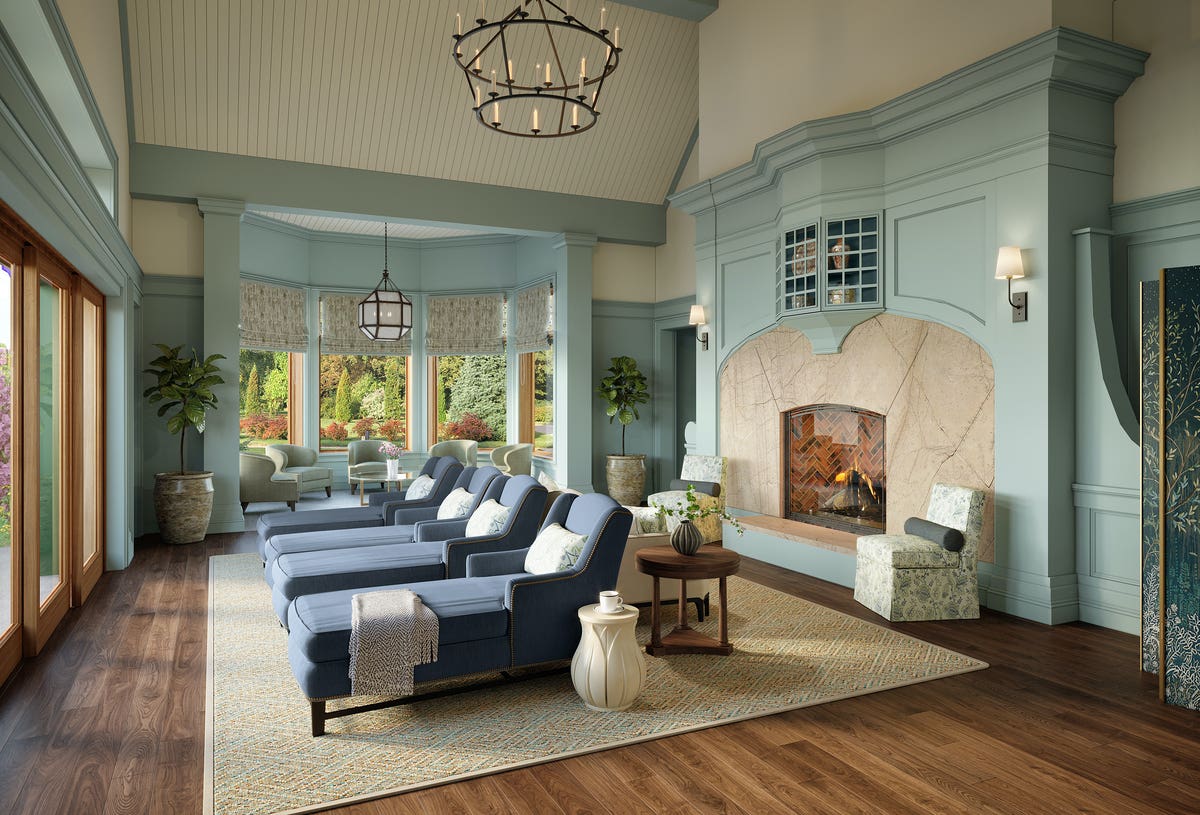
Haver explains that one of the project’s goals was to create a great-room feeling that suits the lifestyle most people are looking for; their design also happens to suggest a Tudor great hall, albeit cozier. To allow the kitchen space to flow seamlessly into the family room, the architects replaced previous partitions with white-oak timber beams on shaped plaster brackets.
Thick plaster Tudor arches recall those constructed in 1931. “In the original house, several of the rooms had beamed ceilings, so we picked up on that theme, and in the kitchen, we took it a step further with a coffered ceiling,” says Haver. White-oak planking warms the walls of the family room, and radiant heat installed in the antique limestone floors—a junction of old and new—keep the spaces comfortably toasty.
A strong center axis that organizes the interconnecting spaces terminates in a fireplace, another Tudoresque detail, with a Cotswold limestone surround and herringbone brickwork within the firebox. Steel casement windows, also common in the Tudor vocabulary, created another challenge. “When the house was built, the windows were single-pane glass,” Skolnick explains. “We had to find a manufacturer who could create a very thin profile into thermal-pane glass.” Tischler Windows and Doors was able to achieve this. Also, to match windows in the original house, all of the windows in the renovation have transoms, a feature that delivers the verticality common to Tudor design.
While they pulled stone floors, ceiling beams, and Tudor arches into the kitchen, the architects gave the room a very modern look that incorporates the client’s preference for a stainless-steel island and complements that industrial look with brushed brass and Calacatta Macchia Oro marble.
“We thought the marble worked well because the layout of the space is very composed and perfectly symmetrical. And yet this wild marble really starts to give it some life,” says Haver of the heavily veined stone. “And the light fixtures over the island are all hung at different heights and very playful. We were really thinking of them more as artwork than lighting.”
Skolnick adds, “When you come into the kitchen, it’s obviously been redone, but it’s very sympathetic to the architecture of the house, and it works with it. There’s a dialog with it.” Another conversation between old and new takes place in the garden room, which was created by enclosing a former porch and installing a bay window. In this intimate space, the original wavy brick walls, formerly on the exterior, become a striking interior feature.
“As architects, it’s a real challenge to work on a building that was done in 1931, and now it’s 2023,” says Skolnick. “The world has changed, people live differently, but yet you want to be respectful of the original architecture. For us, that became the challenge, and that became the concept.”
Manufacturer of furniture, cabinet, window, shutter & door hardware: brass, cast iron, bronze, wrought iron & steel; new reproduction & antique/reconditioned hardware; fireplace accessories; restoration services.